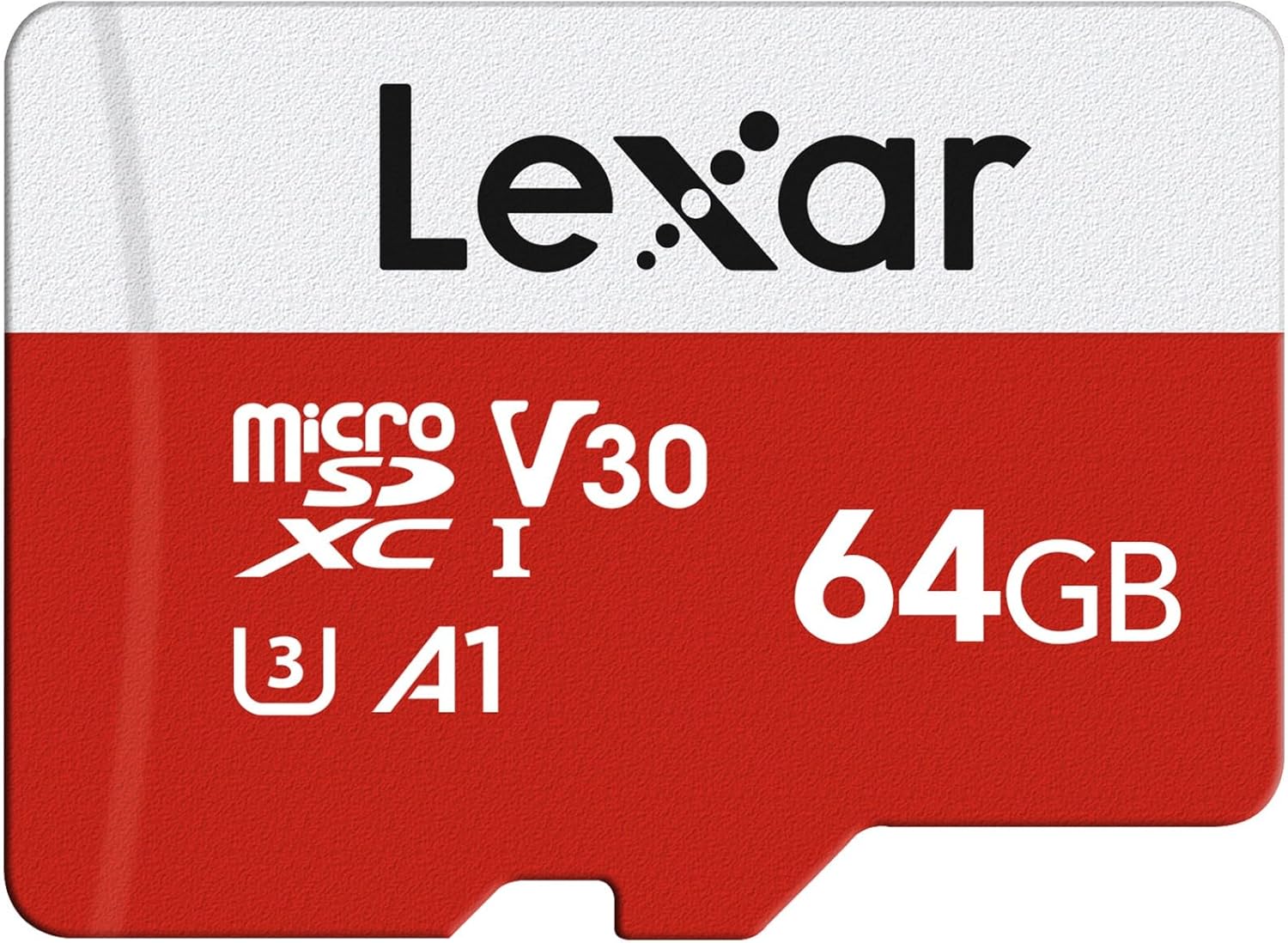
Lexar started off life as the flash memory division of Cirrus Logic before being spun off into its own company in 1996. They were purchased by Micron in 2006, who continued to develop and sell flash memory products under the Lexar name until they sold the brand name and trademark rights to Chinese manufacturer Longsys in 2017. However, during the intervening years, Lexar made a name for themselves in the US market (for good or for worse, depending on your opinion of them).
These are the third model of Lexar cards that I’ve tested (after the Lexar Professional 1000x 64GB and the Lexar Blue 633x 32GB), the second Lexar card produced by Longsys that I’ve tested (after the Lexar Blue 633x 32GB), and the sixth card produced by Longsys that I’ve tested (after the OV 32GB, Chuxia 32GB, Lexar Blue 633x 32GB, Amazon Basics 64GB, and the Raspberry Pi 32GB). My impression of Longsys so far has been that they seem to be a good manufacturer: skimp has been better than average, and their cards have endured well so far. They also seem to have some expertise in designing SD card controllers, as evidenced by the fact that they were able to implement command queueing in the Raspberry Pi 32GB to allow it to achieve A2 performance levels. (However, in my testing, performance between different cards they produced has been mixed.)
I purchased these cards in a 5-pack — so the price that you see above is divided equally between the 5 cards.
As of the time of this writing, I’ve only tested one sample so far — but the results from that one make it clear that, in some ways, this card is markedly different from the other Longsys cards that I’ve tested so far:
- Skimp was much higher — at 2.19%. This means that for a card labelled as 64GB, you’re getting about 62.6GB of usable space. The average among the other Longsys cards was just 0.94%. The average among all authentic cards is currently sitting at 1.82% — meaning that this card did worse than average.
- Sequential I/O speeds were much better: for sequential read speeds, this card was more than 70MB/sec faster than the next closest Longsys card — and scored in the top 5% of all cards I’ve tested so far. For sequential write speeds, it was about 5MB/sec faster. Random I/O speeds were pretty close to the other Longsys cards I’ve tested.
These cards bear the U3, V30, and A1 performance marks. Additionally, the Class 10 mark appears on the package, but does not appear on the card itself. Performance measurements were good enough to qualify for all of these marks. (Well done, Longsys!)
On the endurance testing front:
- Sample #1 has survived 11,279 read/write cycles and has not yet experienced any errors.
- Samples #2-#5 are still in the package, waiting to be tested.
March 8, 2026 (current number of read/write cycles updates automatically every hour)